
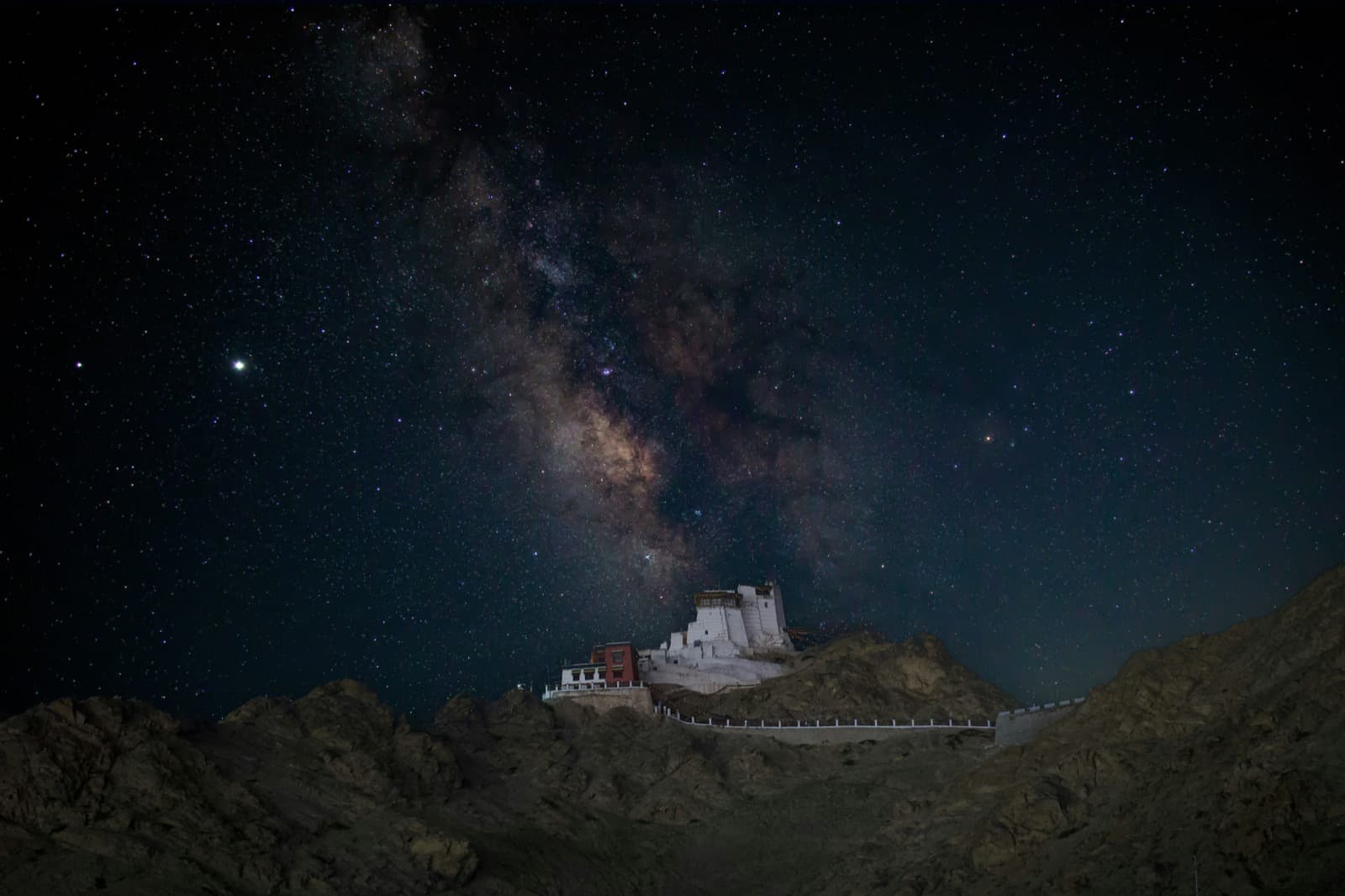
Ladakh Grand Circuit
Moonscapes, the world's highest roads & a lake that shifts color with every passing cloud
Trip overview
Ladakh defies easy description. It is a high-altitude desert at the edge of Tibet, a moonscape punctuated by ancient monasteries, a place where Himalayan peaks meet sand dunes and glacial rivers run the color of sapphires. It is also, for many travelers, the journey that changes everything — the one they point to years later as the moment their relationship with India, with silence, and with the staggering scale of the natural world shifted permanently. Our 10-day Grand Circuit is designed to give you the full Ladakh: three days in Leh for critical altitude acclimatization and some of the finest monastery visits in Asia, two days exploring the green-and-golden Nubra Valley including the remote Balti village of Turtuk near the Pakistan border, two days at Pangong Tso — the 134 km lake that straddles India and China and shifts through a dozen impossible shades of blue — and a final free day to let Ladakh's pace settle in your bones before you return to the world. We travel in a private vehicle with the same Ladakhi driver throughout, carry an emergency oxygen cylinder, keep the group small, and manage altitude gain carefully. GoTrustelle's host is with you from landing to departure. This is not an adventure for adrenaline seekers — it is a journey for people who want to stand somewhere genuinely extraordinary and feel the full weight of it.
Trip highlights
- Pangong Tso (4,350 m) — the 134 km lake that shifts from deep blue to turquoise to green as light changes
- Khardung La (5,359 m) — crossing one of the world's highest motorable roads with snowfields on both sides
- Nubra Valley: Bactrian camel ride across desert dunes beneath 7,000 m peaks
- Turtuk — India's northernmost accessible village, a Balti world of mulberry orchards and ancient wooden mosques
- Diskit's 32-metre Maitreya Buddha gazing across the entire Nubra Valley
- Hemis Festival (June/July departures) — ancient Cham masked dances at Ladakh's largest monastery
- Lamayuru Moonland — an eroded lunar landscape that looks like nothing else on Earth
- Confluence of Zanskar & Indus rivers — two completely different colors of water meeting in silence
Day-by-day itinerary
- 1
Delhi ✈ Leh — Arrival & the golden rule of altitude
One hour by flight from Delhi and you step out into a different planet: thin air at 3,500 m, a sky so blue it almost hurts, and mountains in every direction. The golden rule of Ladakh applies immediately — today, you do nothing. No monastery, no market, no walk up any hill. Check into your deluxe hotel, eat light, drink plenty of water, and let your body begin adjusting to one-third less oxygen than it had this morning. A mild headache is normal. Sleep is medicine. Your room has an emergency oxygen cylinder nearby. Your body is wiser than your itinerary right now — trust it.
🏠 Deluxe hotel, Leh✨ The first sight of Leh from the air — an ancient city cradled by 6,000 m peaks - 2
Leh — Gentle acclimatization & the old city
A slow morning in Leh, moving at altitude's pace. After breakfast, a gentle walk through the 500-year-old Leh Bazaar — fresh apricots, prayer wheels, hand-woven pashmina, the smell of butter lamps. Visit the old Leh Palace, a nine-storey ruin that once rivalled Lhasa's Potala Palace, with sweeping views of the Indus Valley. Afternoon at your own pace: a bookshop, a rooftop café, a conversation with a monk. At sunset, walk to Shanti Stupa — a gleaming white dome on a hilltop above the city — for the most panoramic first-evening view in Ladakh: the Stok Kangri range turning pink, the Indus winding gold below, and the Leh Palace catching the last light. Most travelers feel significantly better than yesterday.
🏠 Deluxe hotel, Leh✨ Shanti Stupa at sunset — your first full Ladakhi panorama - 3
Lower Ladakh — Monasteries, Moonland & the Sangam confluence
A full day exploring the most dramatic stretch of Lower Ladakh. Begin at Alchi Monastery — one of the oldest in Ladakh, built in the 11th century, with remarkably intact frescoes in styles that blend Kashmiri, Central Asian, and Tibetan influences, found now in no other surviving structure in the region. Continue to Lamayuru: a 14th-century monastery set above a landscape so completely unlike everything around it that geologists call it 'moonland' — pale, eerily eroded formations of sediment left when a prehistoric lake drained, looking at first glance like the surface of another planet. Drive back via Magnetic Hill (where the car rolls uphill — a beautiful optical illusion), Pathar Sahib Gurudwara, and the Sangam point where the grey-green Zanskar meets the copper-brown Indus in a sharp, visible line. Two rivers, two worlds, running side by side without mixing.
🏠 Deluxe hotel, Leh✨ Lamayuru Moonland + the Zanskar-Indus Sangam — two unmissable landscapes in one day - 4
Leh → Nubra Valley via Khardung La (5,359 m)
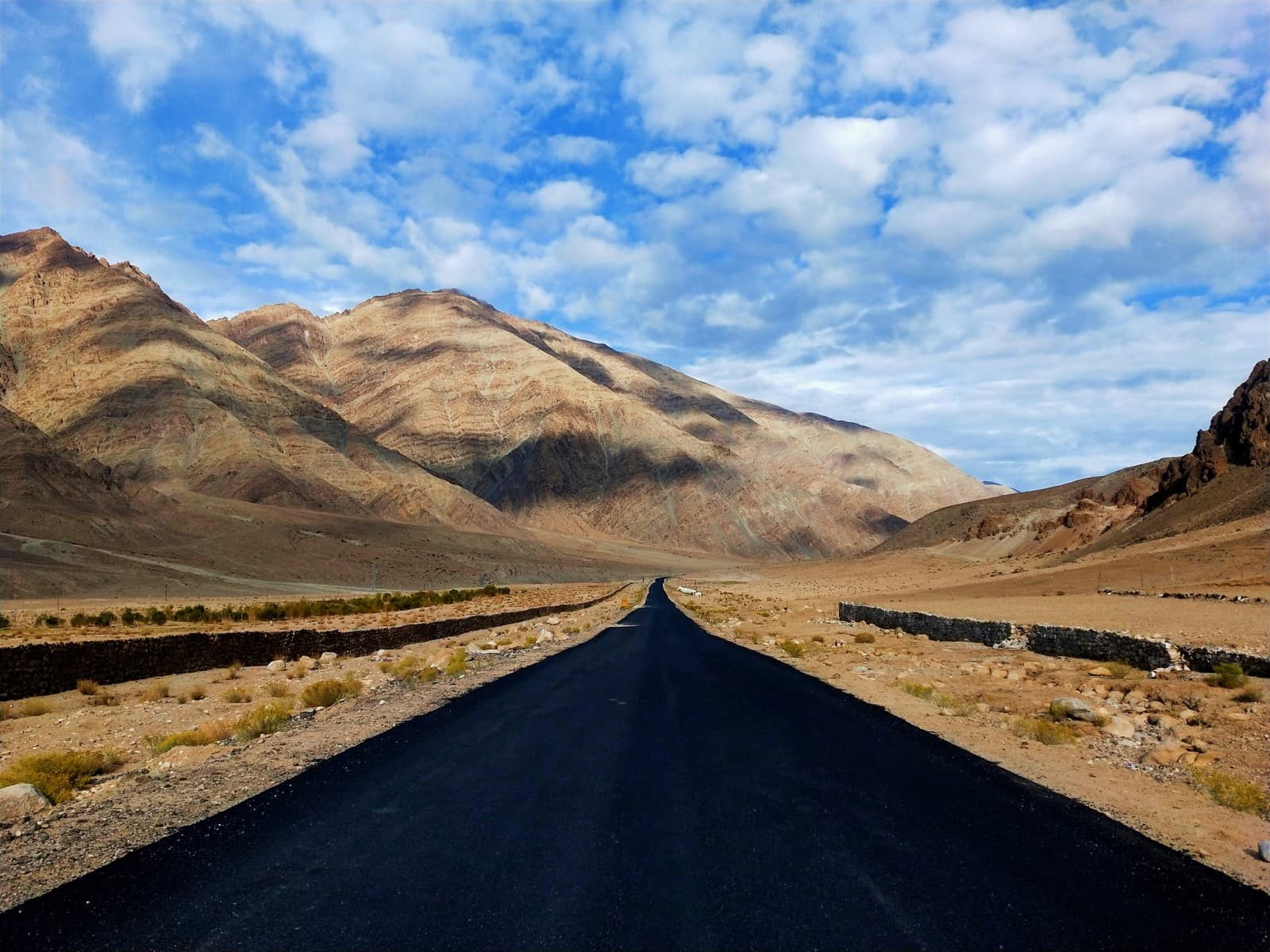
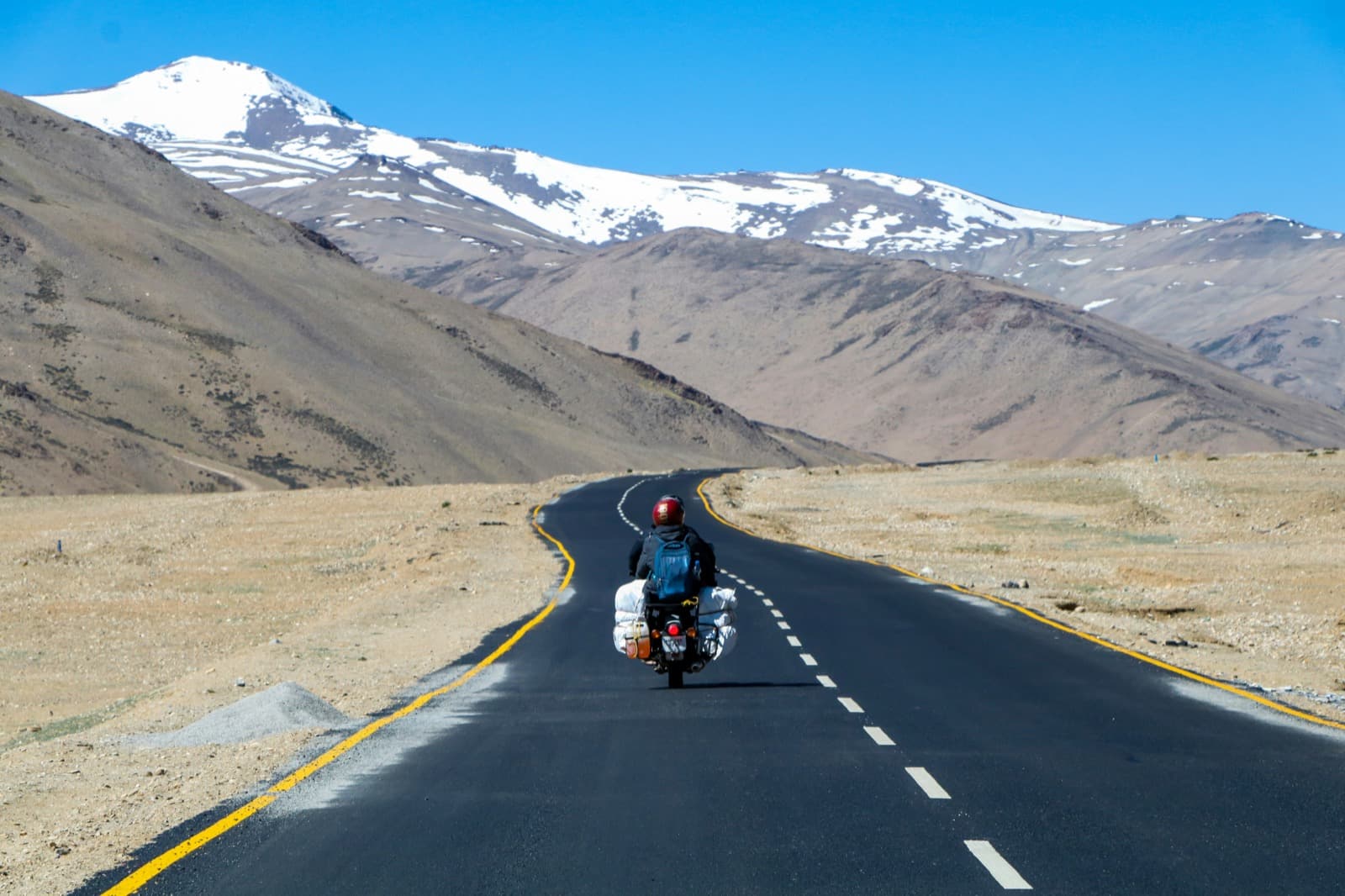
Today you cross the mountains. The drive to Khardung La — one of the highest motorable roads on Earth — takes you through snowfields even in July, past army convoys, and into a silence that grows as the air thins. The pass itself sits at 5,359 m: a small shrine, a tea stall, a signboard, and a 360-degree view of the Greater Himalaya and Karakoram ranges that is unlike anything at lower altitude. Descend into the Nubra Valley on the far side — a complete transformation. After the arid browns of Leh, Nubra is green: poplar trees, apple and apricot orchards, the Shyok River braiding through the flat valley floor. In the late afternoon, drive to the Hunder sand dunes. Here, in the shadow of 7,000-metre peaks, the Himalayan wind has deposited actual desert dunes — and roaming them are the double-humped Bactrian camels of Central Asia. Your camel ride at sunset, with the dunes curling orange and the Karakoram behind you, is the photograph you'll spend the rest of the trip trying to top.
🏠 Boutique guesthouse / eco-camp, Hunder (Nubra Valley)✨ Bactrian camel ride on the Himalayan sand dunes at sunset - 5
Nubra Valley — Diskit, Turtuk & a world near the border
Morning visit to Diskit Monastery, the largest in Nubra, perched on a rocky outcrop above the valley with a 32-metre Maitreya Buddha whose face gazes serenely north towards the Karakoram — and, symbolically, towards Pakistan. Then drive further north to Turtuk, the last Indian village accessible to tourists before the Line of Control, transferred from Pakistani control in 1971. The Balti people of Turtuk have a culture, architecture, script, and language entirely unlike the Buddhist Ladakhi villages: stone houses with carved wooden balconies, ancient mosques, mulberry orchards, and children who wave at strangers with a warmth that makes the border feel very far away. Your guide introduces you to a local family — tea, dried apricots, stories. A place most travelers to Ladakh never reach.
🏠 Boutique guesthouse / eco-camp, Hunder (Nubra Valley)✨ Turtuk — India's northernmost accessible village, unlike anywhere else in Ladakh - 6
Nubra Valley → Pangong Tso (4,350 m) — the lake that stops you cold
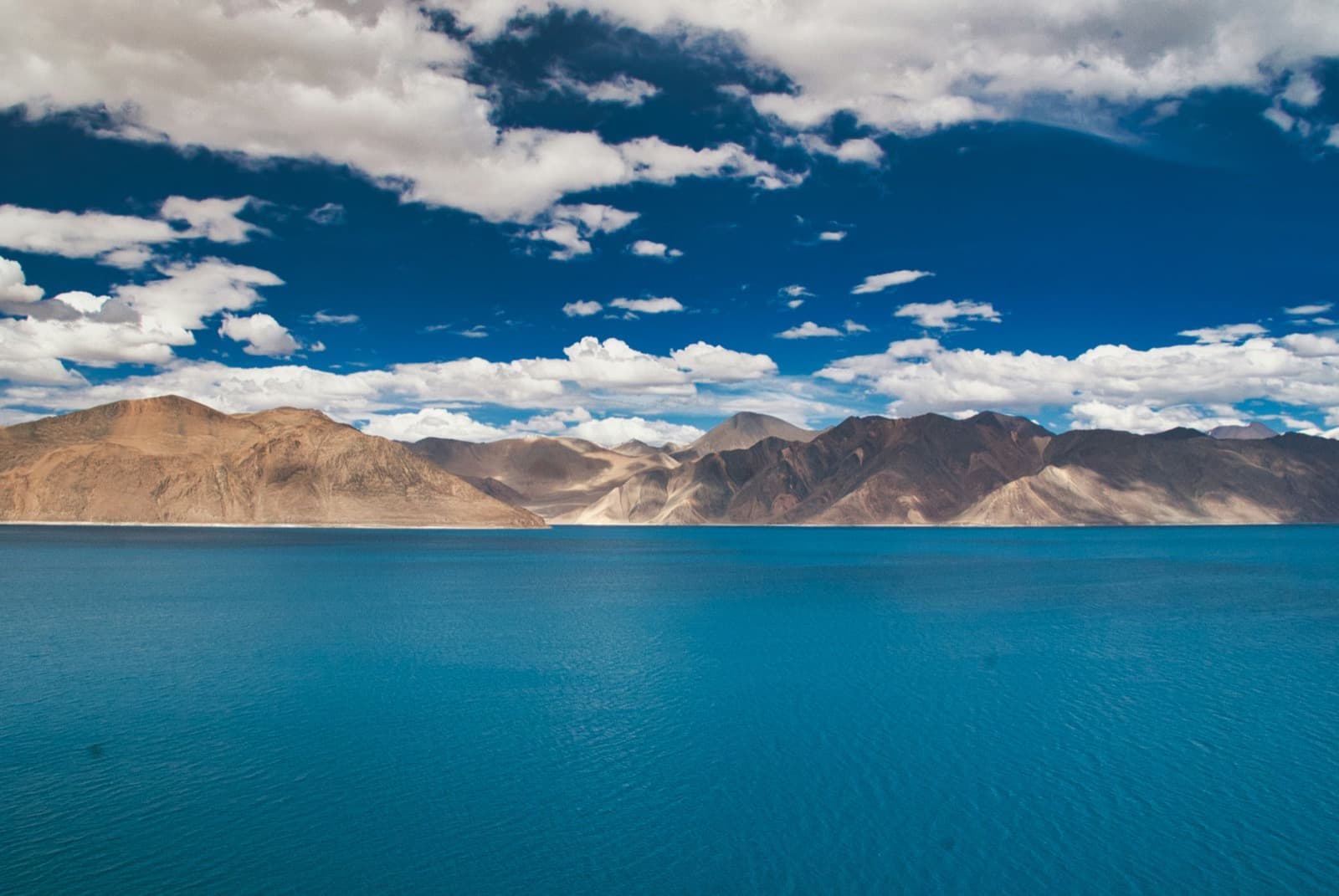
The drive from Nubra to Pangong Tso via the Shyok Valley is one of the great mountain drives in the world: the road follows the Shyok River through gorges of vertical rock, past ancient fortified villages and crumbling stupas, before climbing to the Pangong plateau at 4,350 m. Then the lake appears. You can hear people go quiet in the vehicle every single time. Pangong Tso is 134 km long, sits at over 4,350 m, and straddles the India-China border. The color — a blue of such intensity it seems artificially rendered — is the result of altitude, lack of suspended particles, and a sky that is always bigger up here. Watch the color change through the afternoon and evening: sapphire, cobalt, slate, then silver at dusk. Dinner at the lakeshore with the stars beginning above.
🏠 Lakeside camp / guesthouse, Pangong Tso✨ First sight of Pangong — a color of blue you didn't know water could be - 7
Pangong Tso — A full day with the lake
Wake before dawn. The light at 4,350 m before sunrise has a quality that photographers travel specifically to find — cool, clear, pure. Stand at the waterline and watch the Pangong shift: deep navy to pale gold to the impossible mid-morning blue. Spend the morning walking the south shore towards the village of Spangmik, where Changpa nomadic families sometimes camp with their pashmina goats in the shallower bays. The afternoon is unhurried — a book by the lake, a long walk, a conversation with your guide about what it means to live in a place where winter brings temperatures of −30°C. One more sunset, one more night sky with no artificial light for two hundred kilometres in any direction. The Milky Way here is not a metaphor.
🏠 Lakeside camp / guesthouse, Pangong Tso✨ Dawn on the lakeshore — the Pangong at its most extraordinarily quiet - 8
Pangong → Leh via Chang La (5,360 m) & Hemis Monastery
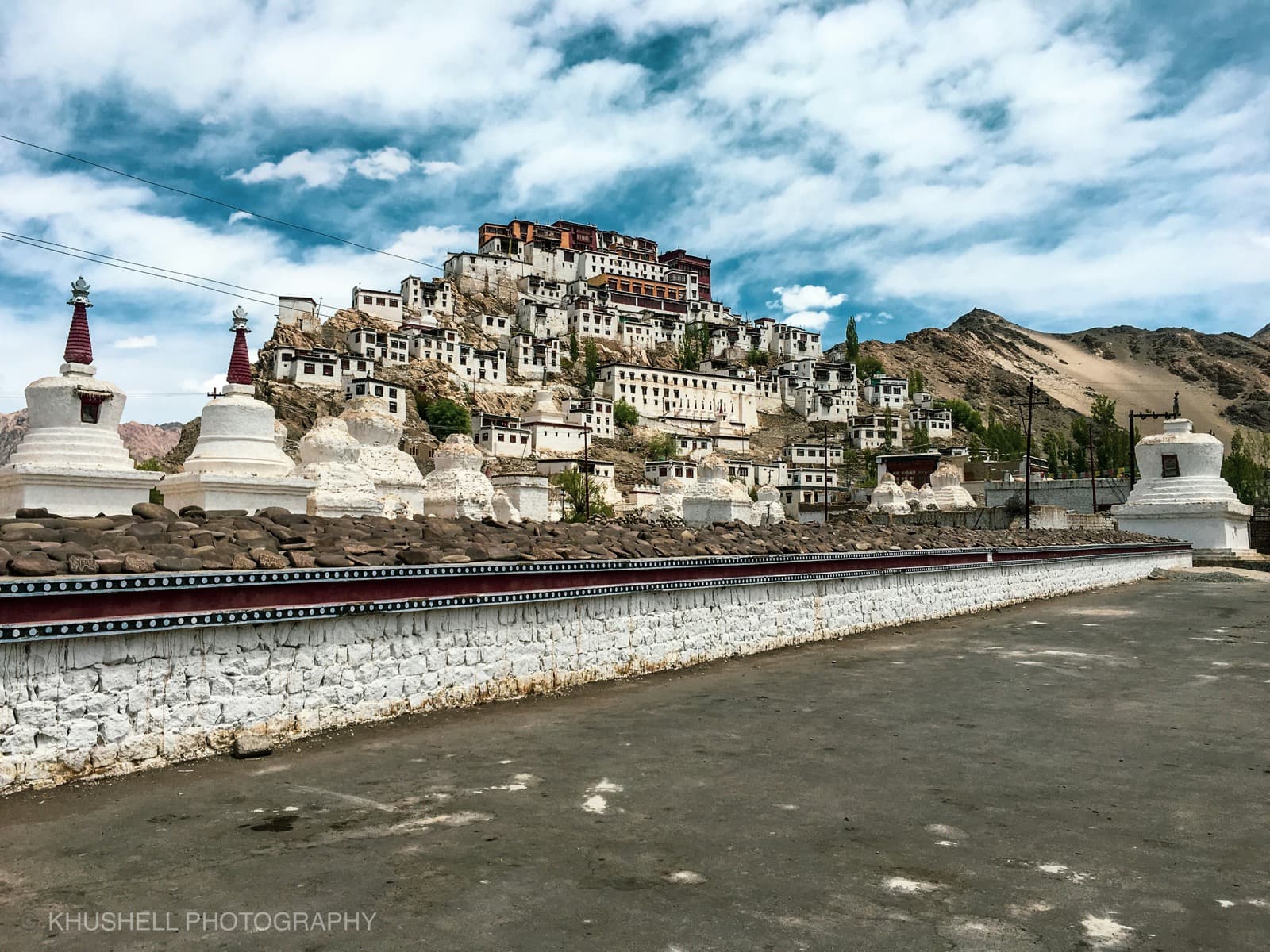
The return to Leh crosses Chang La at 5,360 m — your second high pass, and the one most travelers find more dramatic than Khardung La because the road on the Pangong side is steeper, more exposed, and utterly empty. Stop at the top for the ritual photograph. Descend into the Indus Valley and drive to Hemis Monastery, the largest and wealthiest in Ladakh, built in a hidden valley below red-rock cliffs. The interiors are extraordinary: thangka paintings the size of houses, antique bronze statues, the smell of butter lamps in chapels that have been lit for five centuries. If your departure falls during the Hemis Festival (late June–early July), this becomes the most vivid day of the entire trip: masked Cham dancers in ancient brocade, ceremonial horns, a 300-year-old tradition performed for an audience of monks, villagers, and — now — a small group from GoTrustelle who somehow found their way here.
🏠 Deluxe hotel, Leh✨ Chang La in the morning + Hemis Monastery (festival dates: see departures) - 9
Leh — Free day, local life & the flavours of Ladakh
Leh earns its own full day. Sleep until your body asks you to wake. Wander the old bazaar with no agenda — pashmina shawls, singing bowls carved in Leh, paintings on hand-made paper, dried apricots that taste like condensed summer. Visit the Hall of Fame, the Indian Army's tribute to the soldiers who have kept these borders for decades in temperatures that stop your watch. Optional afternoon: a cooking class with a Ladakhi family — making thukpa (noodle broth), momos (steamed dumplings), and a cup of butter tea that you will either love or remember for its audacity. This is also the day the trip becomes a memory you can hold: the passes, the dunes, the lake, the monastery courtyard full of dancers.
🏠 Deluxe hotel, Leh✨ Leh at your own pace — the day you let it all settle - 10
Leh ✈ Delhi — Departure
Last breakfast in thin air. Your driver takes you to Kushok Bakula Rinpoche Airport — a small, beautiful terminal with the Stok Kangri range visible from the departure gate. One hour by flight and you are back in Delhi: thick air, heat, the full intensity of the plains. You arrive carrying something Ladakh gives almost everyone who stays long enough: a recalibration of scale, a quieter sense of what is and is not worth worrying about. Our team in Delhi confirms you are safely on your way.
🏠 —✨ The flight back — watching the Ladakhi peaks disappear into cloud
What's included
- ✓9 nights accommodation: 3 nights deluxe hotel Leh + 2 nights boutique guesthouse/eco-camp Nubra Valley + 2 nights lakeside camp/guesthouse Pangong Tso + 2 nights deluxe hotel Leh (twin-sharing throughout)
- ✓Private Innova Crysta / SUV for all sightseeing and transfers — same vehicle and driver throughout
- ✓Professional English-speaking Ladakhi guide for monastery and heritage visits
- ✓All Inner Line Permits: Nubra Valley, Pangong Tso, Turtuk restricted area
- ✓Wildlife Sanctuary and Protected Area entry fees
- ✓9 breakfasts + 8 dinners (all meals at properties included)
- ✓Bactrian camel ride at Hunder sand dunes (Nubra Valley)
- ✓Emergency oxygen cylinder in vehicle throughout the trip
- ✓First-aid kit with basic altitude medication on board
- ✓All tolls, parking and driver allowances
- ✓GoTrustelle host present for airport arrival and departure + 24/7 on-trip support
Not included
- ✕Return flights Delhi ↔ Leh (book early — typically €80–150 per sector; we assist with booking on request)
- ✕Lunches throughout the tour (we recommend trusted local restaurants — budget ₹300–500 per meal)
- ✕Monastery and monument entry fees (typically ₹50–100 per site)
- ✕Helicopter evacuation insurance (strongly recommended for all high-altitude travel)
- ✕Personal expenses: shopping, beverages, tips, laundry
- ✕Travel & comprehensive medical insurance (required)
- ✕Any costs from flight delays, cancellations or weather-related itinerary changes
- ✕Personal altitude medication beyond first-aid kit (consult your doctor before travel)
Other journeys you might love
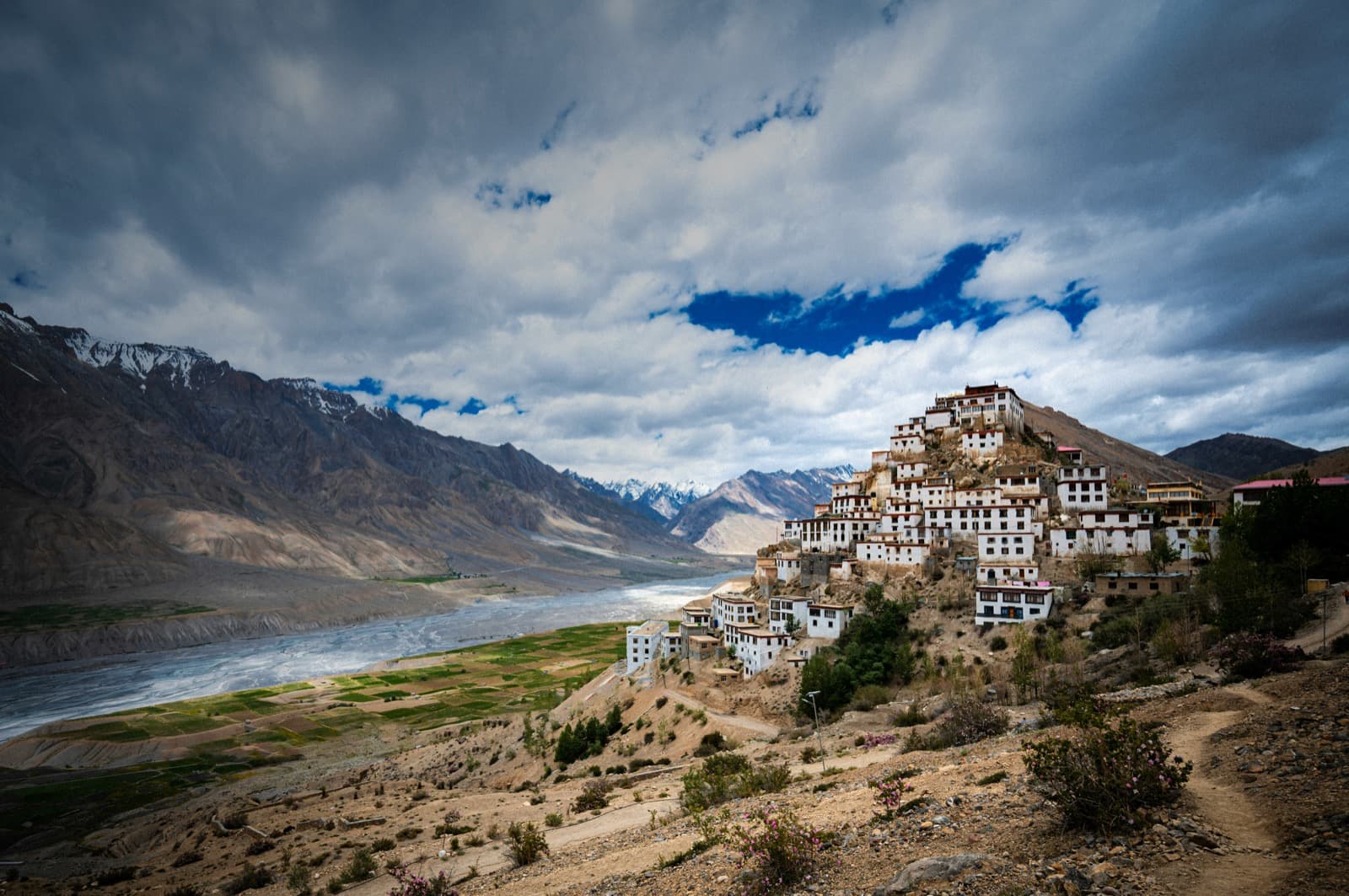
Spiti Summer Expedition
6N / 7D · Himachal Pradesh, North India
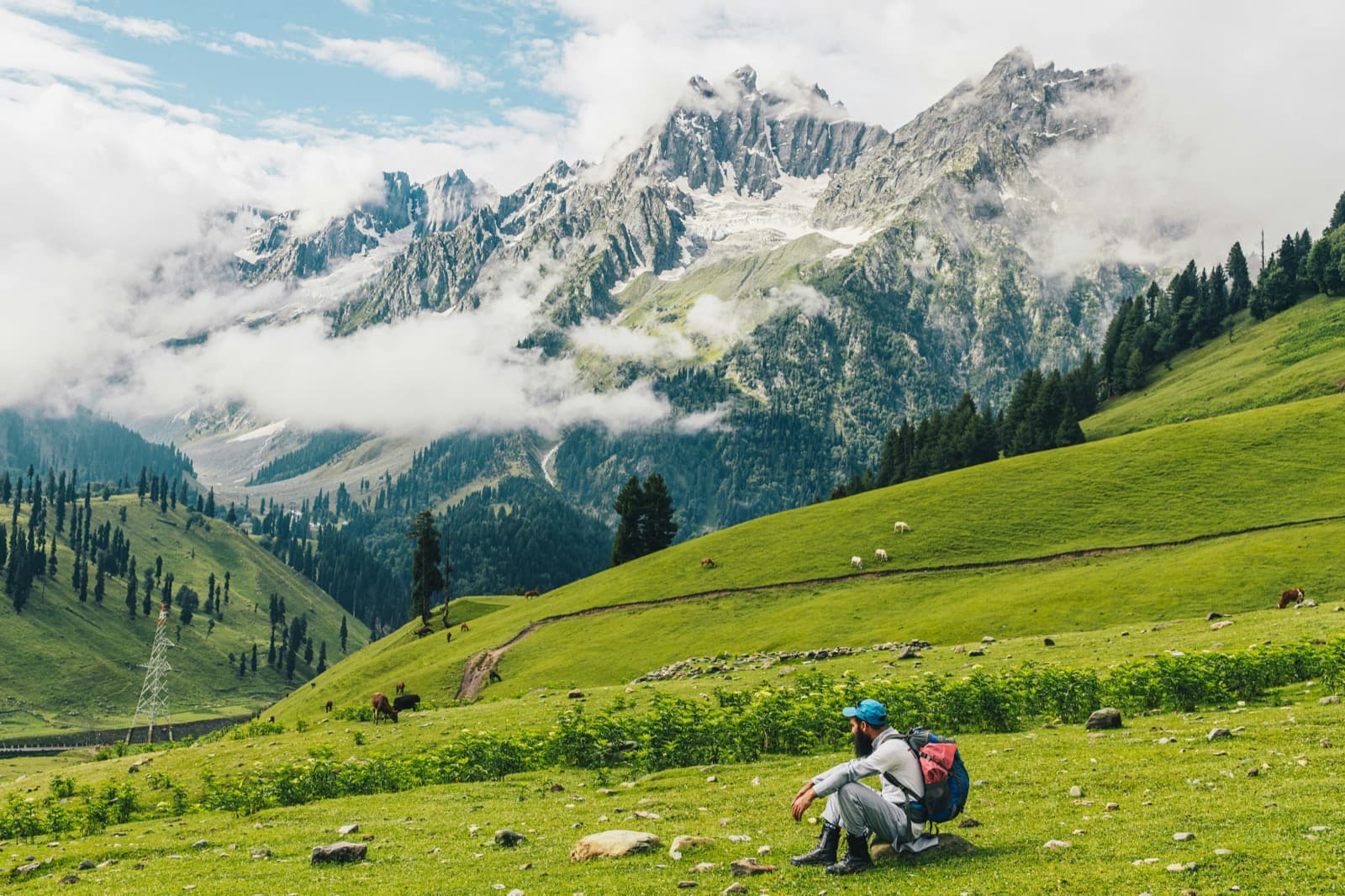
Paradise of Kashmir
4N / 5D · Jammu & Kashmir, North India
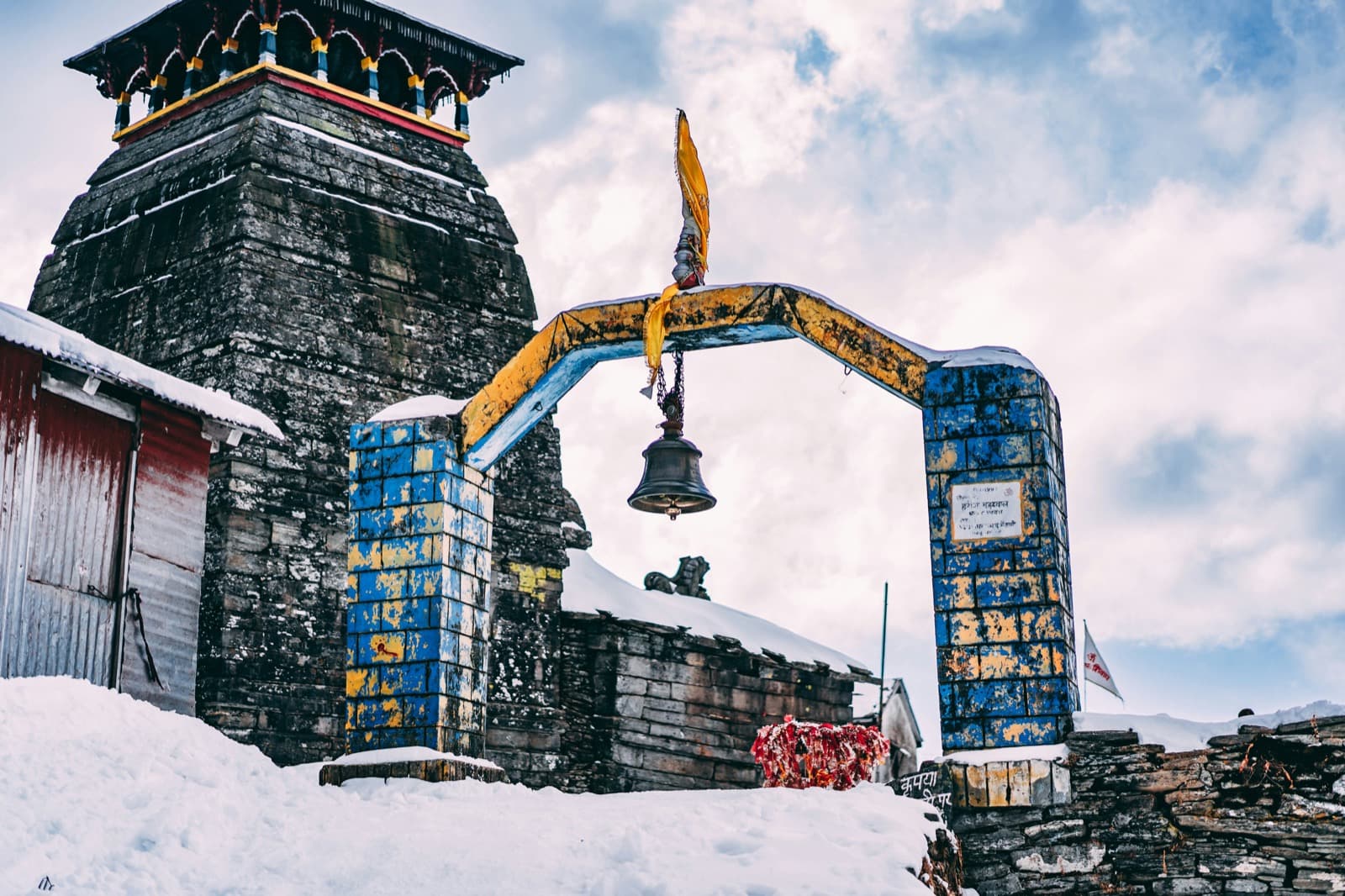
Rishikesh & Himalayan Escape
6N / 7D · Uttarakhand, North India
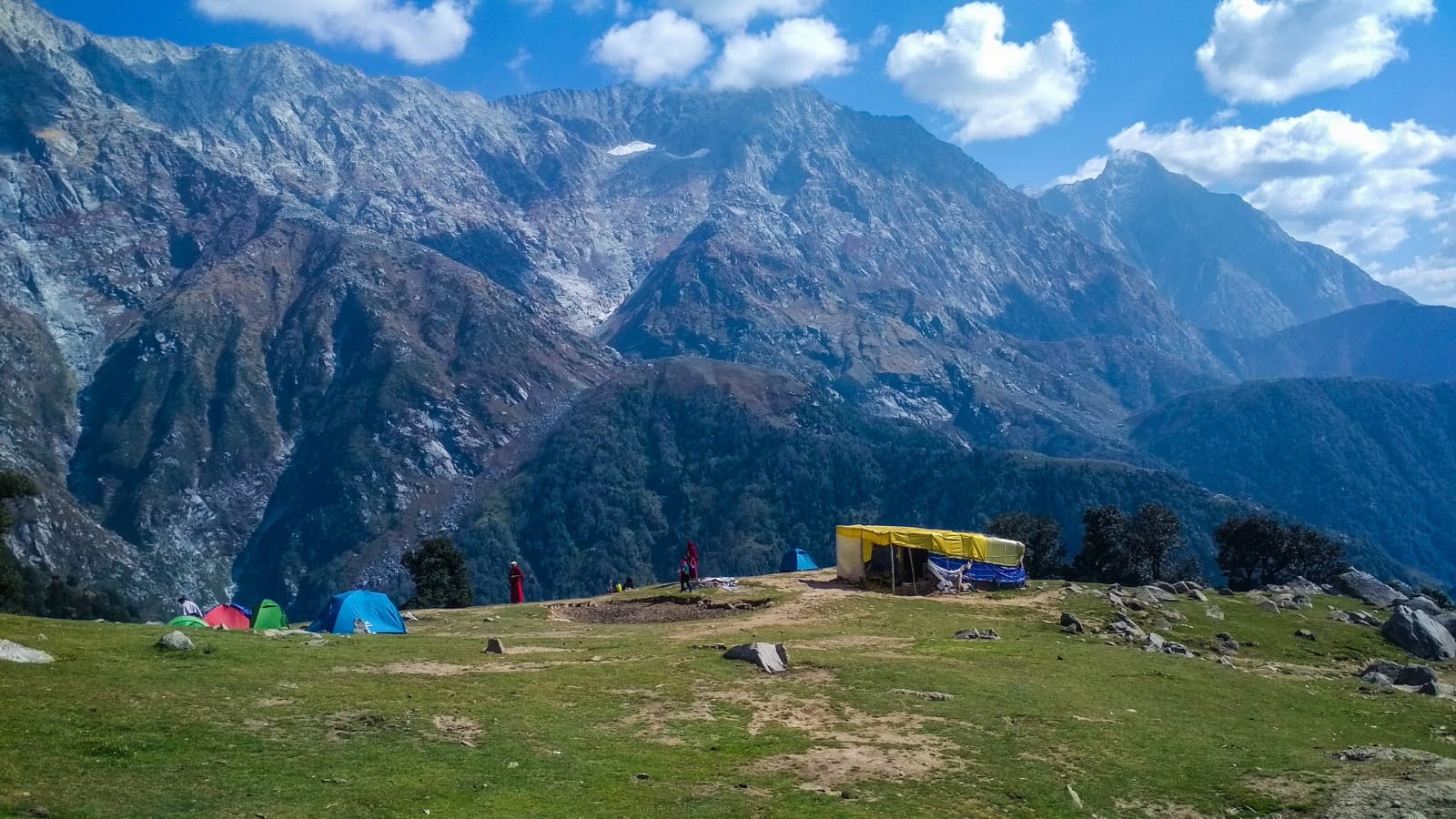
Dharamshala, Bir & the Triund Trek
6N / 7D · Himachal Pradesh, North India
Ladakh Dark Sky Circuit
12N / 13D · Ladakh & Changthang, North India
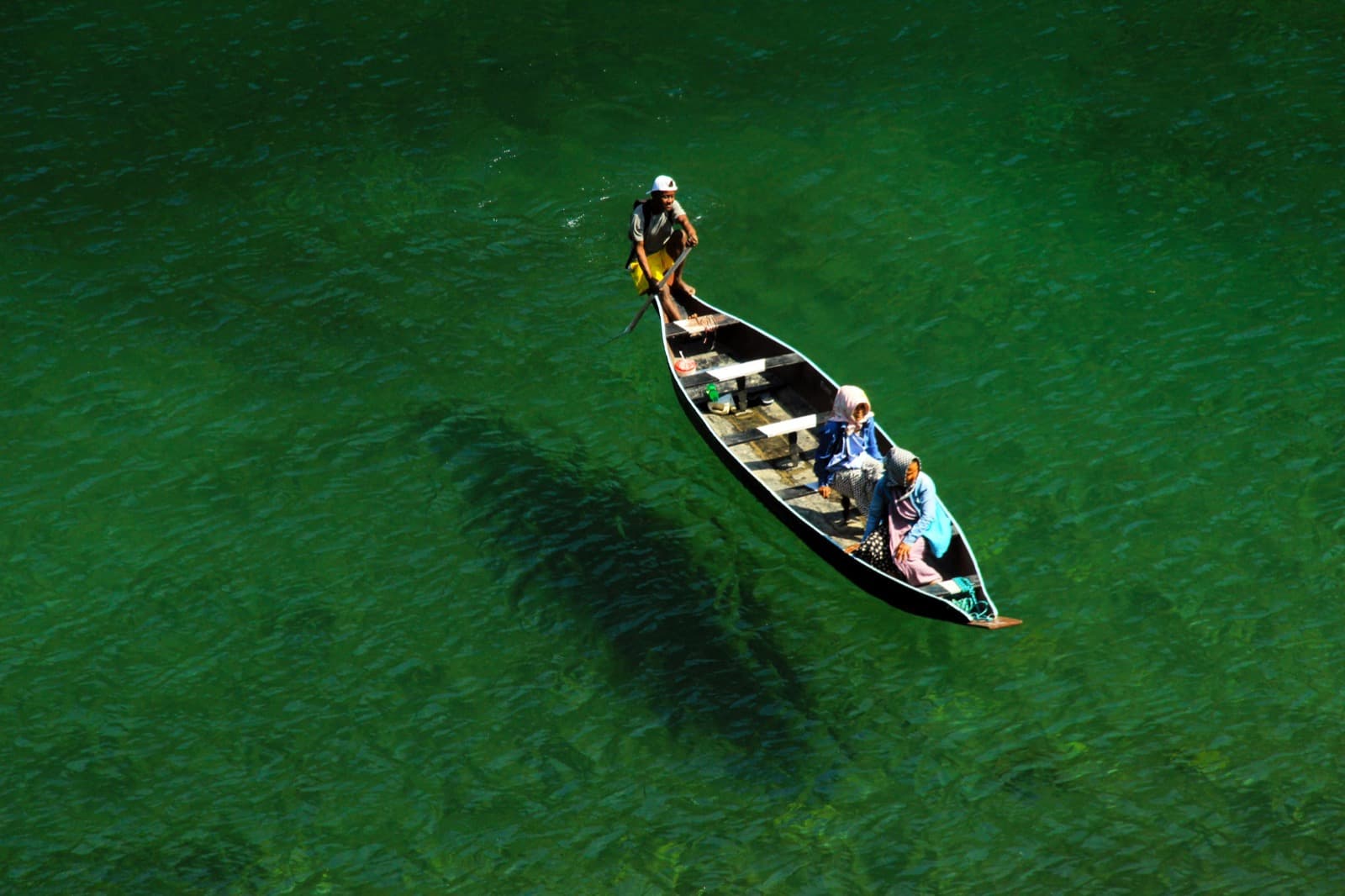
Northeast India — Meghalaya & Living Bridges
9N / 10D · Meghalaya & Assam, Northeast India