
Northeast India — Meghalaya & Living Bridges
Root bridges grown over centuries, Asia's cleanest village & a river you can see through to the bottom
Trip overview
Most travelers to India never make it to the northeast. That's not a criticism — it's an invitation. The Seven Sisters states hold a version of India that is completely unlike anything in the north, south, east, or west: ancient tribal cultures still very much alive, forests that drip green twelve months of the year, a linguistic and culinary world the rest of India rarely encounters. This 10-day circuit moves through two of the northeast's most rewarding states — Meghalaya ('Abode of the Clouds') and a corner of Assam — and builds to what most travelers name as the single most extraordinary thing they've seen in India: the double-decker living root bridges of Nongriat, where the Khasi people have trained the roots of rubber fig trees across river gorges for over 500 years until the roots have fused and grown into natural living bridges strong enough to carry fifty people at once. Add the crystal-clear Umngot River at Dawki (where boats appear to float on glass), the waterfalls of Cherrapunji (the wettest landscape on Earth, whose falls run most powerfully in July–September), and Mawlynnong — the spotlessly maintained 'cleanest village in Asia' — and you have a journey that bears almost no resemblance to the India most Europeans picture. Deliberately small group, private vehicle, and personally hosted throughout.
Trip highlights
- Double-Decker Living Root Bridge, Nongriat — 500 years of Khasi bioengineering, a UNESCO tentative site
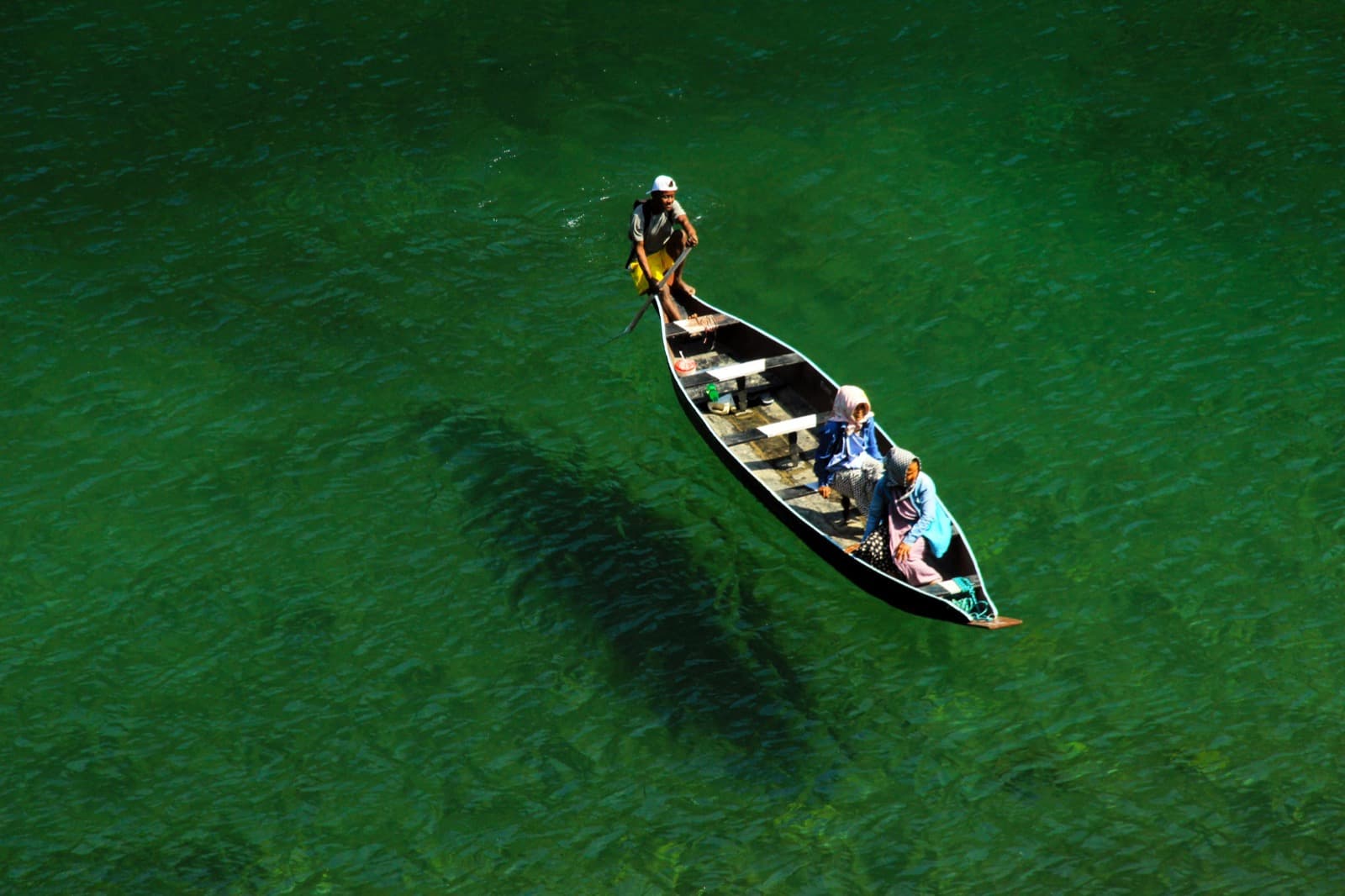
- Umngot River, Dawki — a river so transparent boats appear to float on air
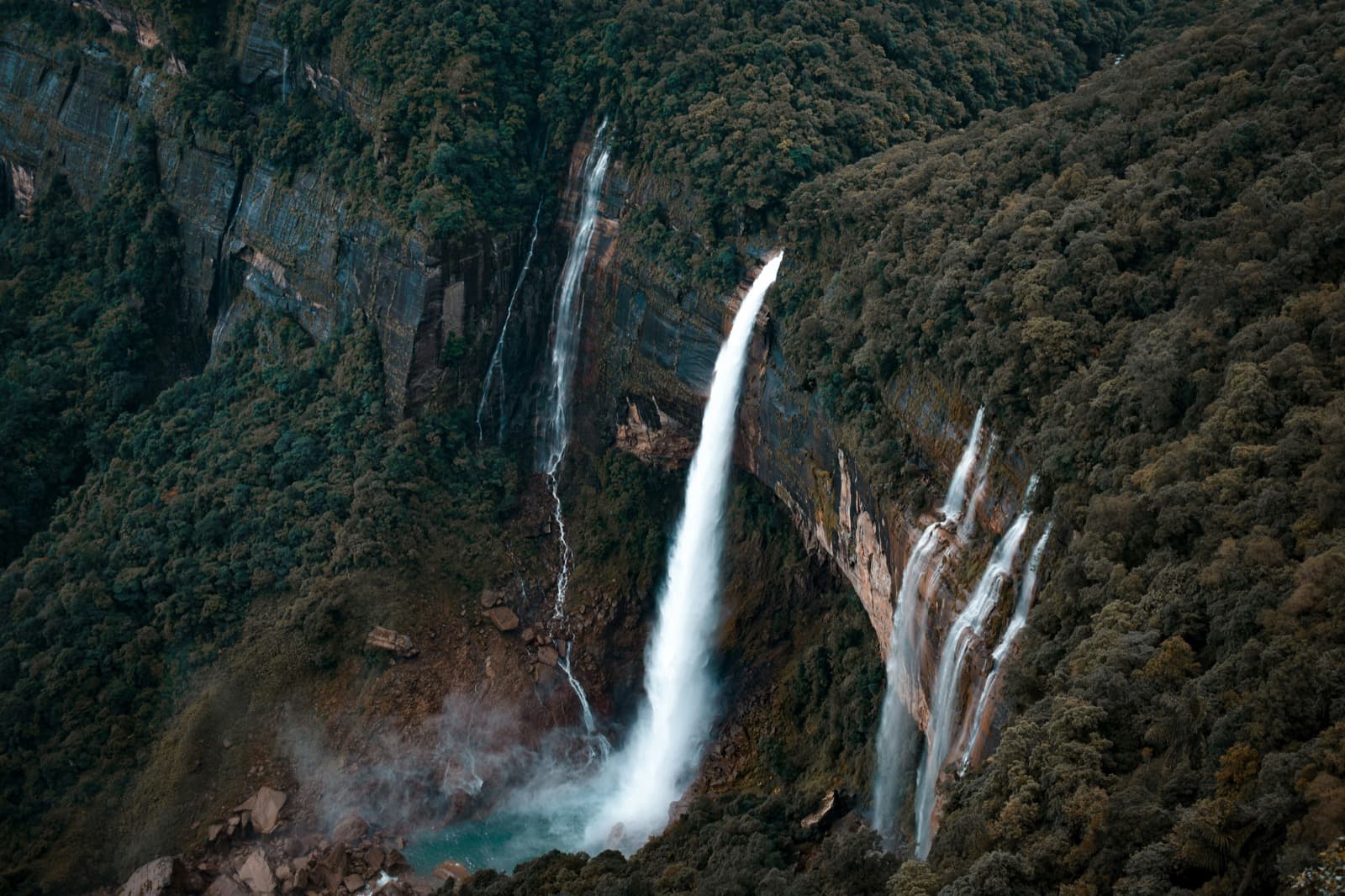
- Nohkalikai Falls — the 4th highest waterfall in the world, running at full power July–September
- Mawlynnong — Asia's cleanest village, with sky walks and the India-Bangladesh plains below
- Seven Sisters Falls — seven parallel streams dropping off the Meghalayan plateau
- Mawsmai Limestone Caves — ancient cave formations deep inside the Cherrapunji plateau
- Shillong — the 'Scotland of the East', a hill station city unlike anywhere else in India
- Kamakhya Temple, Guwahati — one of India's most powerful and atmospheric pilgrimage sites
Day-by-day itinerary
- 1
Delhi → Guwahati ✈ — Gateway to the Northeast
Fly to Guwahati (2 hours from Delhi) — the largest city in the northeast and your entry point into a part of India that feels completely different from the moment you land. The air is heavier, greener, wetter. Transfer to your hotel and, after a rest, evening visit to Kamakhya Temple perched on Nilachal Hill: one of the most important and atmospheric Shakti temples in India, where pilgrims from across South Asia come to pray. Return for dinner on the banks of the Brahmaputra — India's most powerful river, so wide you cannot see the far shore.
🏠 Boutique hotel, Guwahati✨ Kamakhya Temple at dusk — ancient, arresting, unlike any temple in North India - 2
Guwahati → Umiam Lake → Shillong
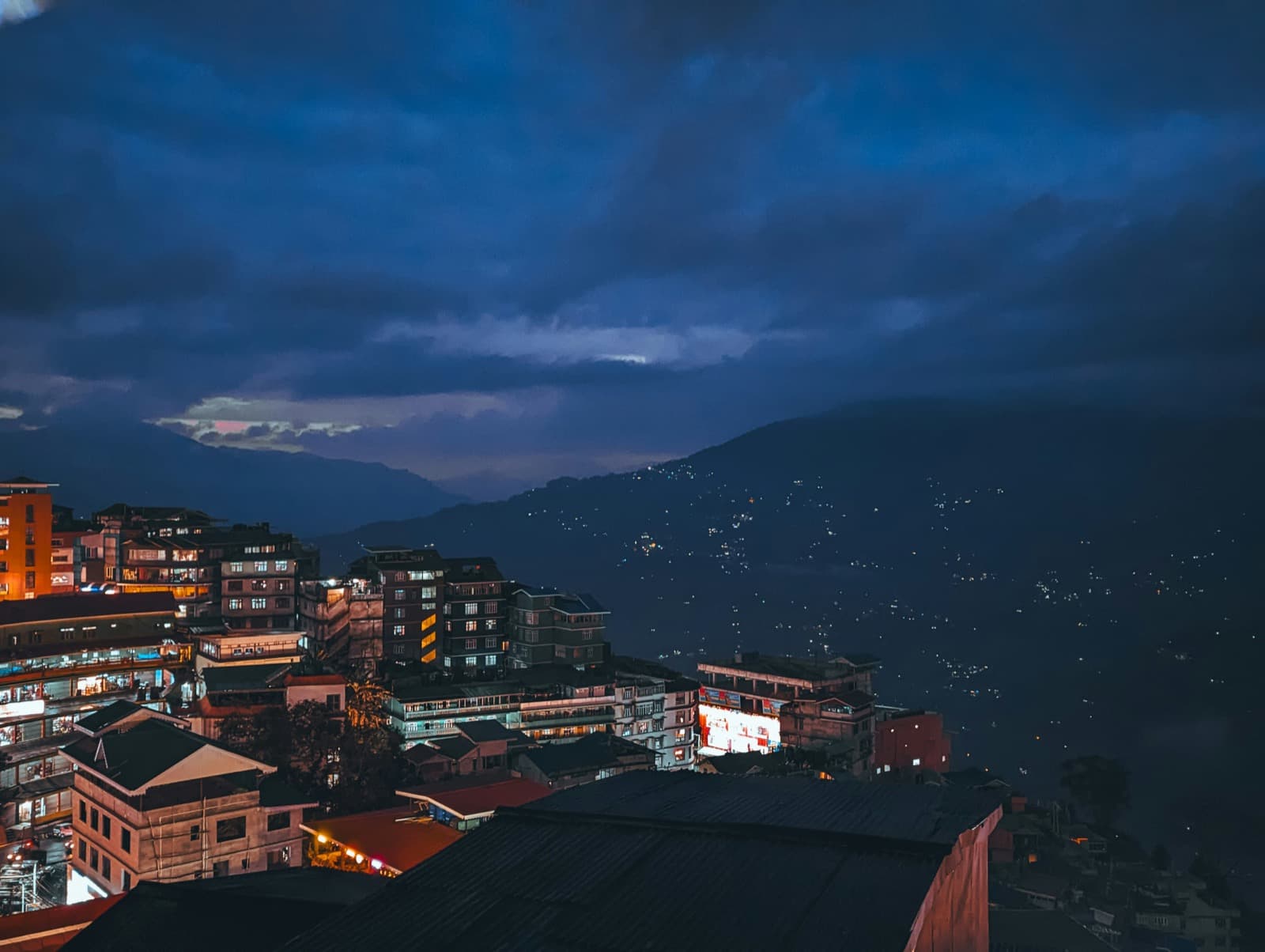
The drive from Guwahati up to Shillong (3 hours, 1,500 m gain) is among the most scenic in the northeast: the road winds through subtropical forest, past the vast blue Umiam Lake (perfect for a photo stop and a tea), and up into the Khasi Hills. Shillong — the capital of Meghalaya — is India's 'Scotland of the East': pine forests, a colonial-era centre, and a live music scene that has produced more rock musicians per capita than perhaps any other Indian city. Check in, explore the local market, and let the cooler air settle in.
🏠 Boutique hotel, Shillong✨ Umiam Lake viewpoint — the blue reservoir framed by forest hills - 3
Shillong — City, falls & the Don Bosco Museum
Full day in Shillong at a comfortable pace. Morning: Ward's Lake (a colonial-era ornamental lake in the centre of the city), Elephant Falls (a three-tiered waterfall 12 km from the city, surprisingly dramatic), and the Cathedral of Mary Help of Christians (striking gothic architecture in a pine forest). Afternoon: the Don Bosco Centre for Indigenous Cultures — seven floors of the most comprehensive museum of northeast India's tribal cultures, a world few outsiders understand. Evening: Shillong's Police Bazar market — local street food, handwoven Meghalayan textiles, and the particular energy of a city that does things its own way.
🏠 Boutique hotel, Shillong✨ Don Bosco Museum — the most important cultural museum in the Indian northeast - 4
Shillong → Cherrapunji (Sohra) — The wettest place on Earth
Drive one hour south to Cherrapunji — the plateau that holds the world record for the highest recorded annual rainfall. In July–September the landscape is beyond lush: waterfalls pour off every cliff, the air is permanently cool and misty, and the views south to the Bangladesh plains (when the clouds lift) are endless. Arrive and settle in. Afternoon walk to Thangkharang Park for the first views of the plateau edge — and the beginning of the falls that make Cherrapunji unlike anywhere else in India.
🏠 Boutique resort, Cherrapunji✨ First sight of the Meghalayan plateau edge — the world beneath the clouds - 5
Cherrapunji — Waterfalls, caves & the edge of the world
Full day in and around Cherrapunji's extraordinary landscape. Seven Sisters Falls — seven parallel streams of water dropping from the plateau in a single sweeping face (most powerful July–September). Nohkalikai Falls — the fourth highest waterfall in the world, a single 340-metre drop into a turquoise plunge pool that seems impossibly blue against the green of the valley. Mawsmai Caves — a narrow, cathedral-like limestone cave system that goes deep into the plateau, lit by formations of calcite that took millennia to grow. Return to the resort for dinner with the mist rolling in from the Bangladesh plains.
🏠 Boutique resort, Cherrapunji✨ Nohkalikai Falls — 340 metres into a pool the colour of glacier water - 6
Trek to Nongriat — The Double-Decker Living Root Bridge
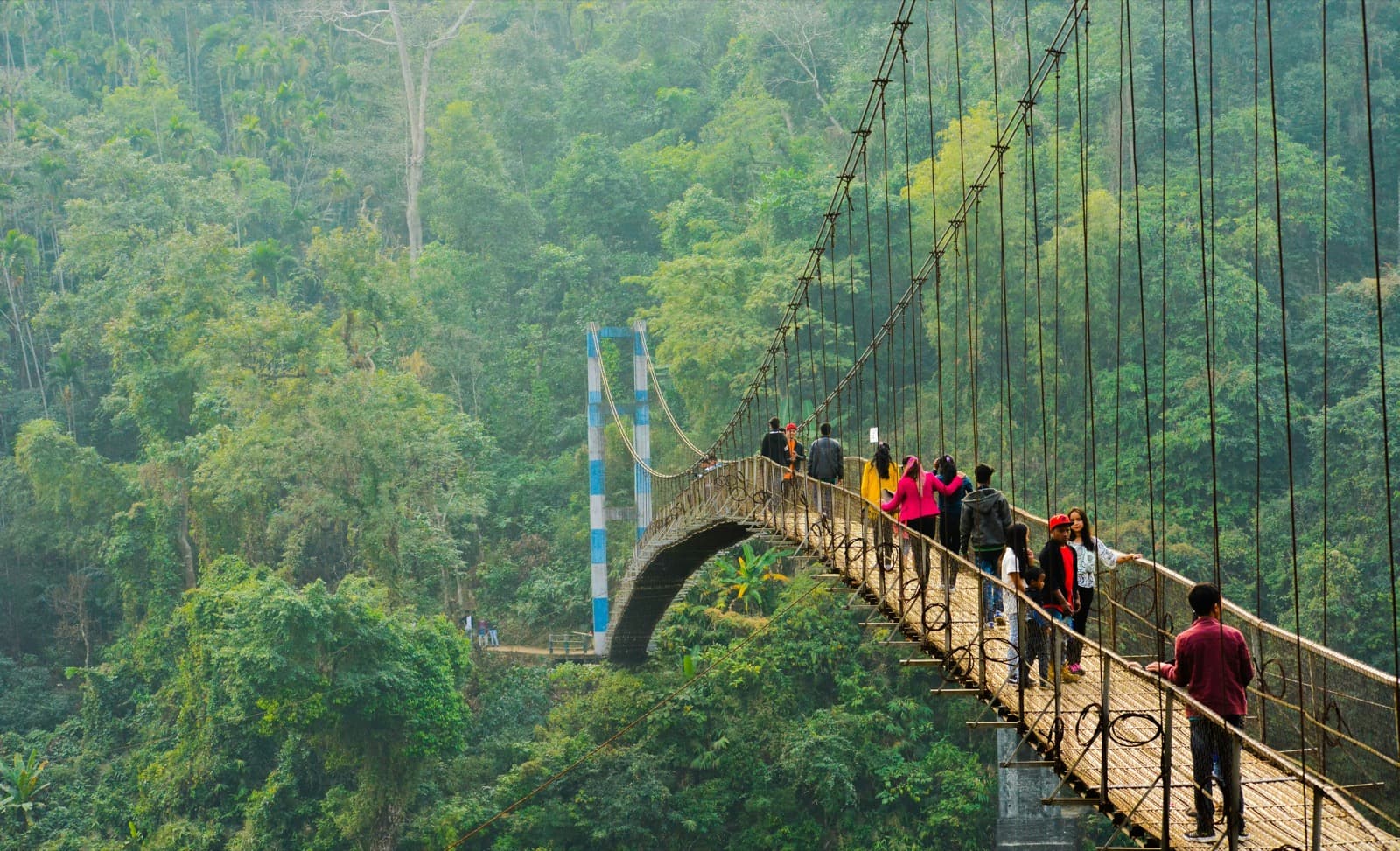
The day most travelers name as the most extraordinary of their entire India trip. A 4.5 km descent (3,000+ steps) through dense subtropical forest to Nongriat village — a community accessible only on foot, where the Khasi people have spent over 500 years training the aerial roots of Indian rubber fig trees across river gorges until they fuse, interlace, and grow into natural bridges strong enough to carry dozens of people at once. The Double-Decker Root Bridge is a UNESCO-tentative World Heritage site — two bridges stacked vertically over the same river, still alive and still growing. Take a swim in the natural rock pool nearby, eat a simple lunch in the village, and climb back up in the late afternoon. Your legs will know about it tomorrow. It will be completely worth it.
🏠 Boutique resort, Cherrapunji✨ The Double-Decker Living Root Bridge — 500 years of living bioengineering - 7
Cherrapunji → Mawlynnong → Dawki
Drive to Mawlynnong — designated Asia's Cleanest Village and now something of a legend in the northeast: every home has a broom at the door, every path is swept, the air smells of flowers, and the community maintains the village out of shared pride rather than government mandate. Climb the bamboo sky walk above the forest for views down to the Bangladesh border plain. Then drive to Dawki on the India-Bangladesh border, where the Umngot River flows across a white sand bed so cleanly that the boats on the surface appear to float on air, with every pebble on the bottom visible from fifteen feet above. An evening boat ride as the light drops over the river.
🏠 Guesthouse, Dawki / Shillong✨ Dawki's Umngot River — the glass river where boats float on nothing - 8
Dawki → Jaintia Hills → Nartiang Monoliths → Shillong
Return towards Shillong via the Jaintia Hills — a different Meghalayan culture from the Khasi, with its own language and traditions. Stop at Nartiang, where the largest collection of pre-historic monoliths in the northeast stand in a village field: enormous stones hauled and erected by Jaintia kings as memorials, their true origins and meaning still debated. Arrive back in Shillong for an evening meal and a final walk through the market — last chance for Meghalayan textiles, local honey, and the particular flavour of a hill station city at night.
🏠 Boutique hotel, Shillong✨ Nartiang monoliths — the northeast's ancient standing stones - 9
Shillong → Tea Estate → Guwahati
Morning drive down from the Meghalayan plateau back towards the Assam plains, stopping at a working tea estate in the Assam foothills for a guided walk through the gardens, a tasting session with the estate manager, and a proper cup of Assam tea brewed the way it's meant to be — strong, reddish-gold, and nothing like what comes out of a supermarket box in Europe. Continue to Guwahati for a final evening by the Brahmaputra.
🏠 Boutique hotel, Guwahati✨ Assam tea estate — the original source of the world's most consumed beverage - 10
Guwahati → Delhi ✈ — Departure
Morning flight back to Delhi (2 hours). You leave the northeast with images that don't fit the India you thought you knew: a bridge made of roots, a glass river, a village where everyone sweeps their own path. Our team sees you off at Guwahati airport.
🏠 —✨ Last look at the Brahmaputra — India's other great river
What's included
- ✓9 nights accommodation: 1× boutique hotel Guwahati + 2× boutique hotel Shillong + 2× boutique resort Cherrapunji + 1× guesthouse Dawki + 1× boutique hotel Shillong + 1× boutique hotel Guwahati (twin-sharing)
- ✓Private vehicle for all sightseeing and transfers throughout
- ✓Professional English-speaking guide with expertise in Meghalayan culture and ecology
- ✓Nongriat Living Root Bridge trek with local Khasi guide
- ✓Dawki river boat ride on the Umngot
- ✓Assam tea estate entry and guided tasting session
- ✓9 breakfasts + 8 dinners
- ✓All entry fees for parks, caves, and sky walk (Mawlynnong)
- ✓All tolls, parking and driver allowances
- ✓24/7 on-trip support and GoTrustelle host throughout
Not included
- ✕Return flights Delhi ↔ Guwahati (approx. €60–100 per sector; we assist with booking on request)
- ✕Lunches (we recommend local Meghalayan restaurants — budget ₹300–500 per meal)
- ✕Personal expenses: shopping, beverages, tips
- ✕Travel & medical insurance (recommended)
- ✕Any optional activities beyond those listed (Kaziranga safari available as an add-on for Oct–Mar travelers)
- ✕Any costs from weather delays or road closures (monsoon travel may involve minor reroutes)
Other journeys you might love
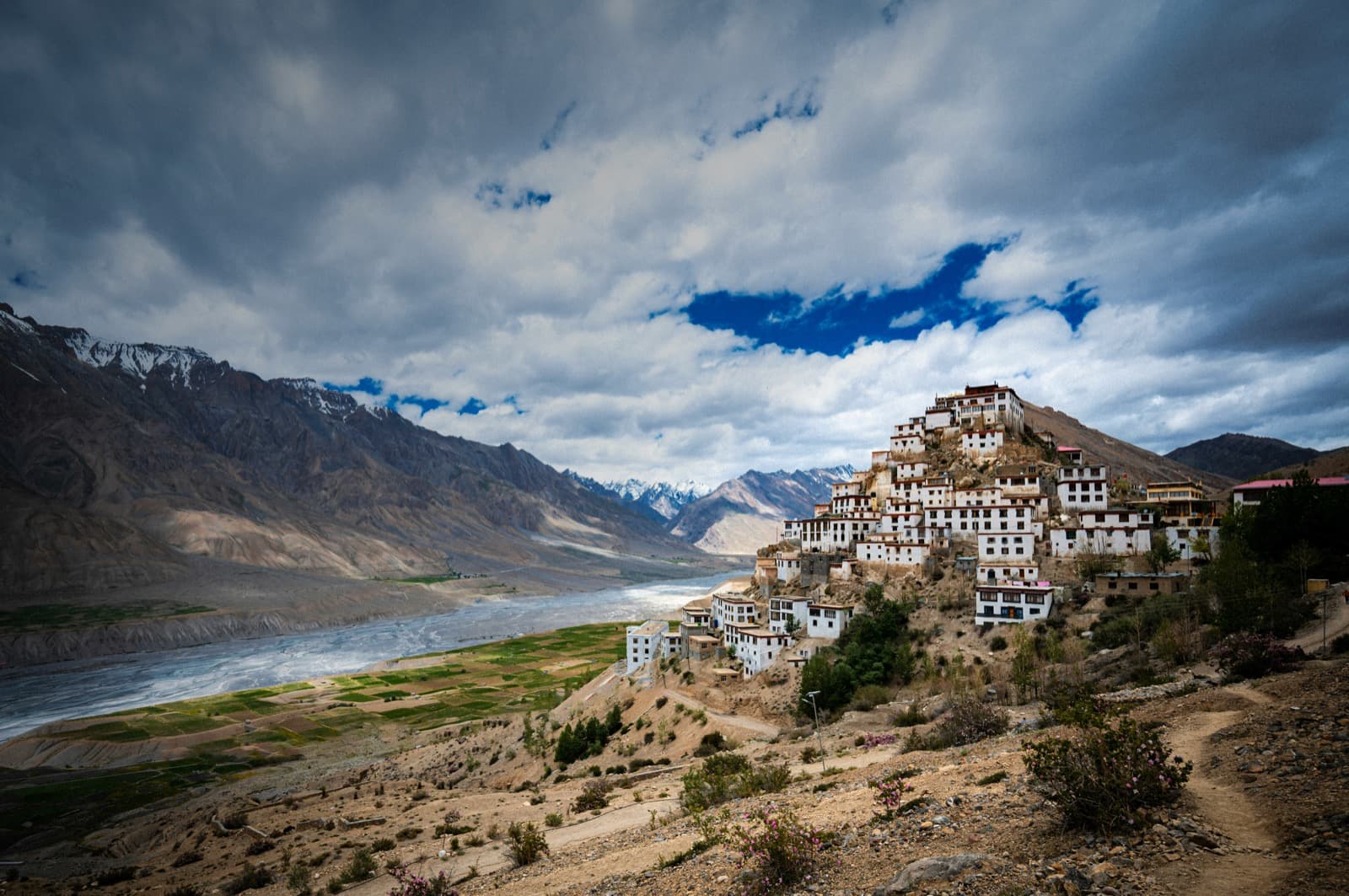
Spiti Summer Expedition
6N / 7D · Himachal Pradesh, North India
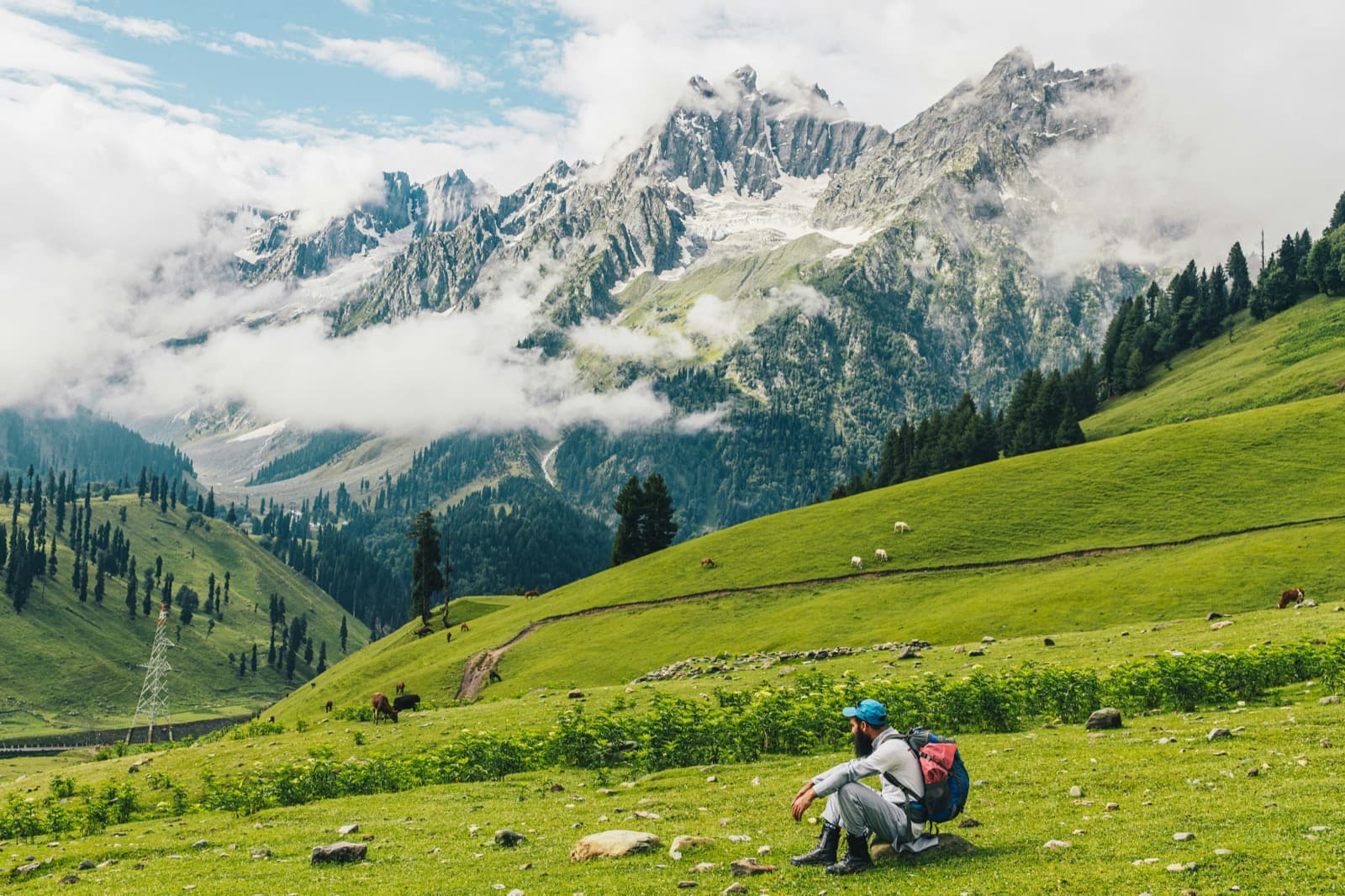
Paradise of Kashmir
4N / 5D · Jammu & Kashmir, North India
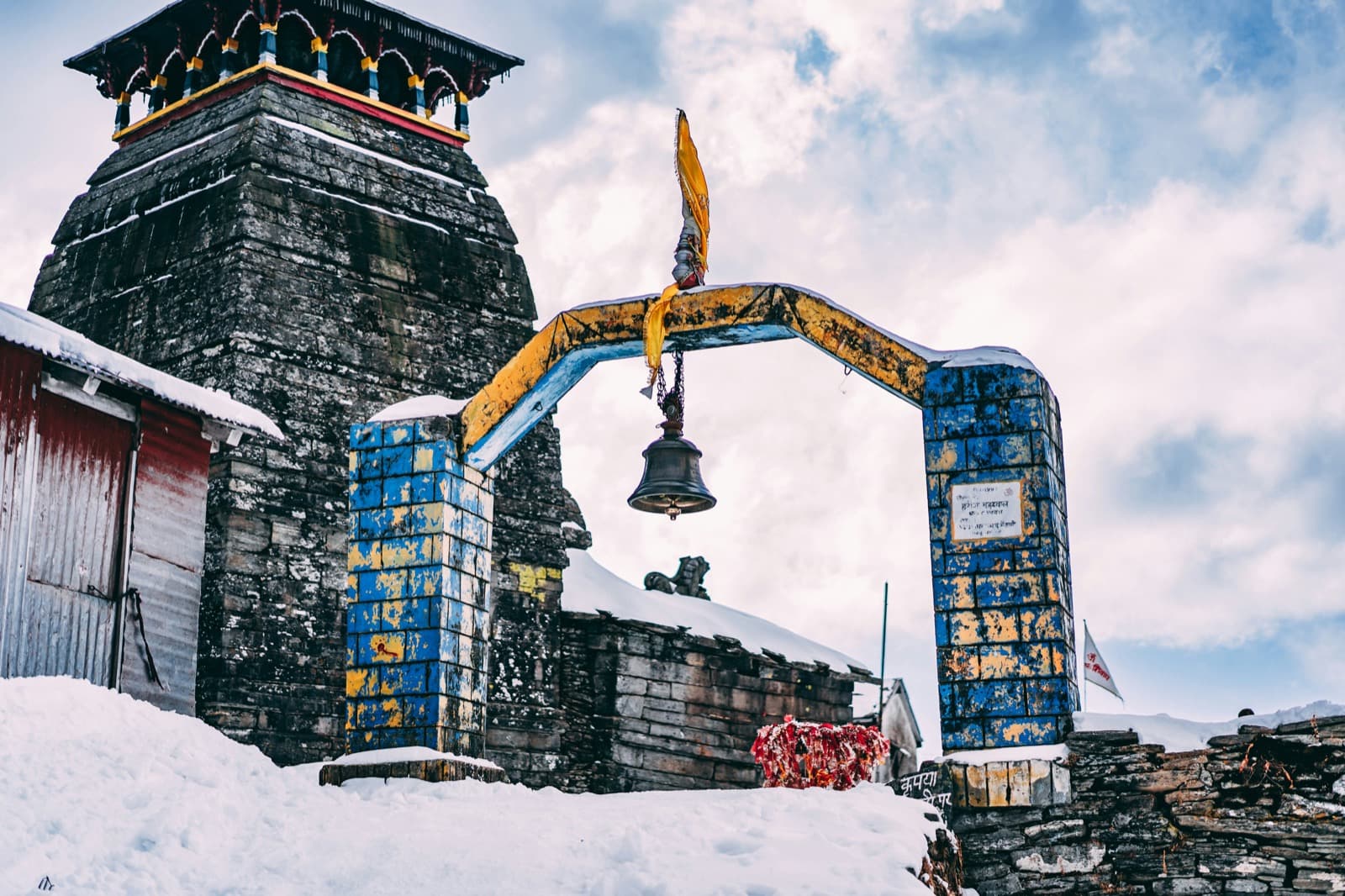
Rishikesh & Himalayan Escape
6N / 7D · Uttarakhand, North India
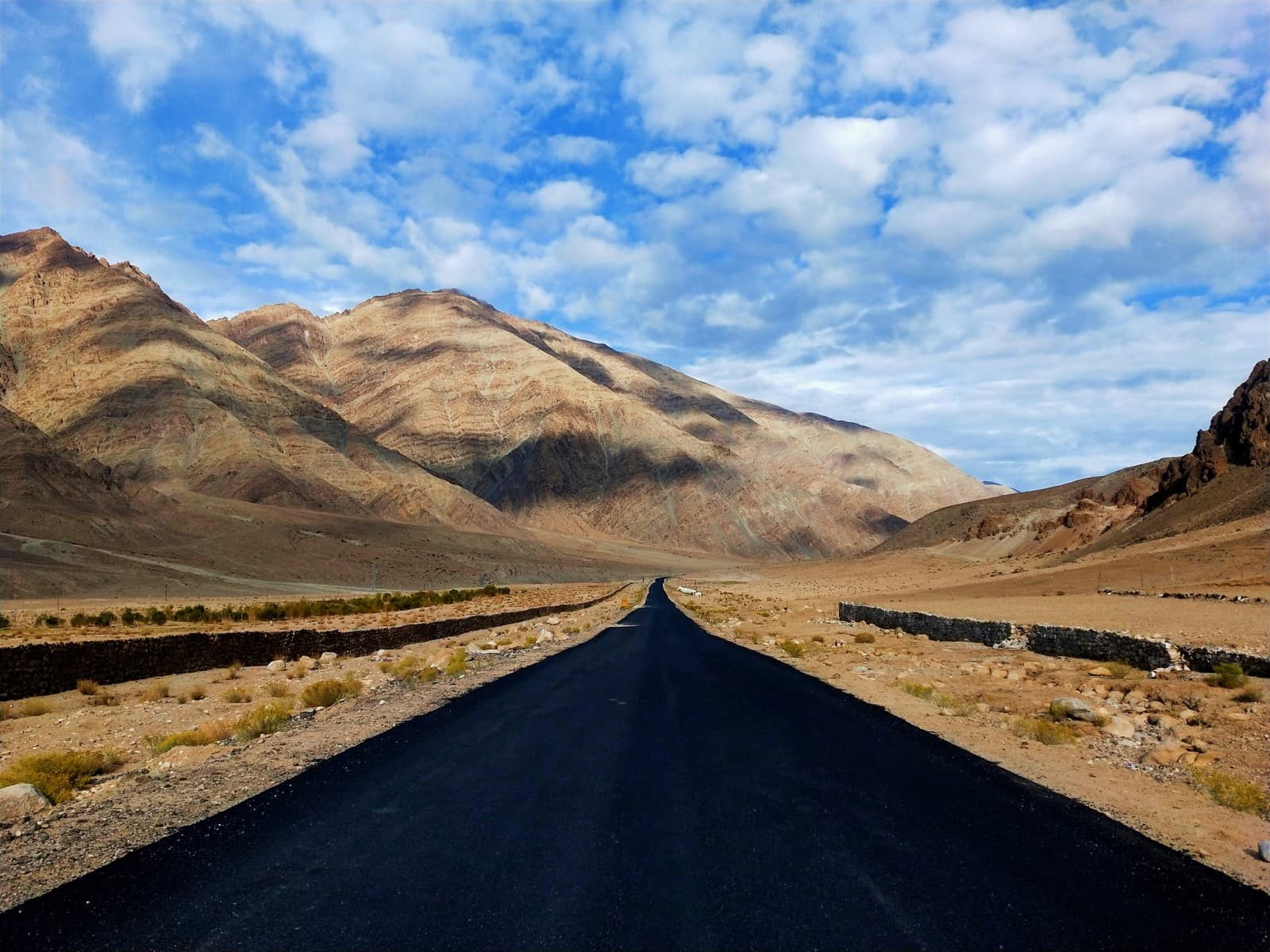
Ladakh Grand Circuit
9N / 10D · Ladakh, North India
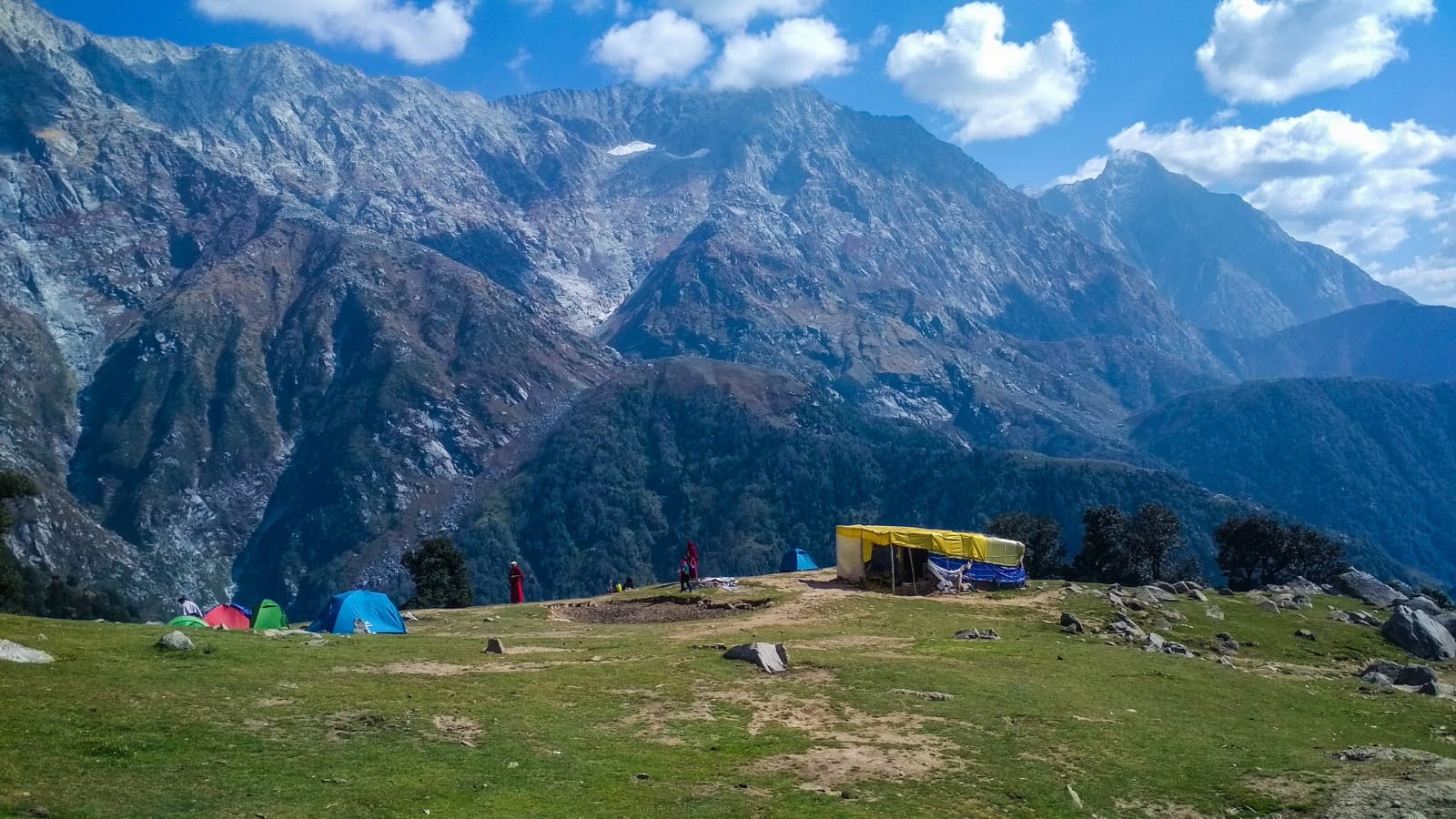
Dharamshala, Bir & the Triund Trek
6N / 7D · Himachal Pradesh, North India
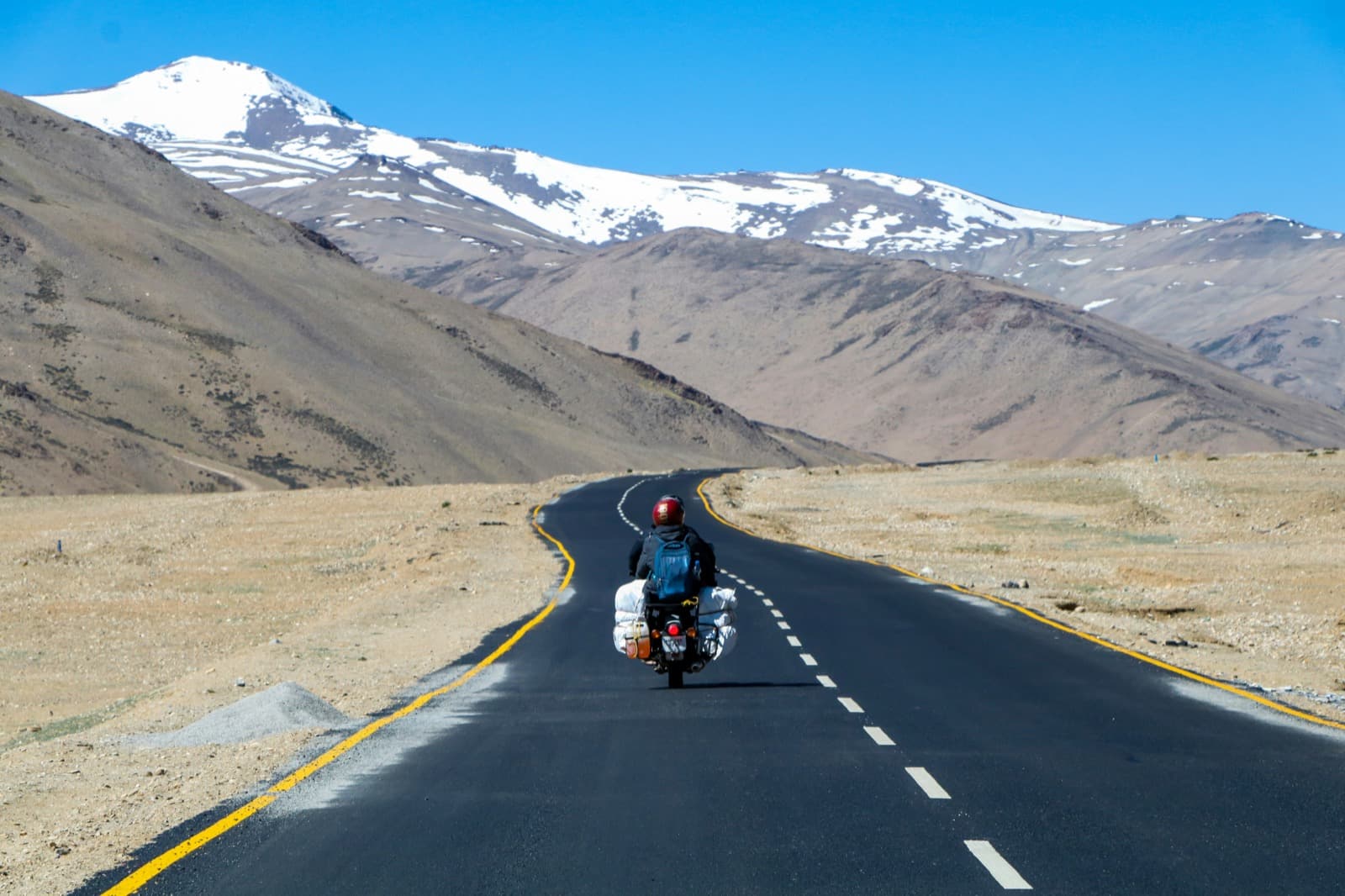
Ladakh Dark Sky Circuit
12N / 13D · Ladakh & Changthang, North India